Categories
- Technology (10)
- Application (7)
- News (5)
» Technology

Direct answer There is no single best display technology — there is a best technology for a given set of constraints. E-paper wins when power is scarce, the information changes slowly, and readability in daylight matters most. TFT LCD wins for colour, size range and cost when the screen is powered continuously anyway. OLED wins when you need high contrast, …
Direct answer Buy a bare panel when your own board already has a display interface and you intend to control the image yourself. Buy a kit when you want to plug something in and see a picture. The three kit levels answer three different questions: a driver board converts a raw panel into a usable interface; a mainboard adds the …
Direct answer An HMI serial display module contains its own controller and firmware, so your host board talks to it with short text commands over UART, RS232 or RS485. A plain TFT LCD is a panel that your host must drive itself, pixel by pixel, through RGB, SPI or MIPI. Choose the serial module when you want a working user …
Direct answer An e-paper (E-Ink) display module is a reflective display assembly that keeps an image on screen without drawing power — it only consumes energy while the picture changes. Choose one when your device is battery- or solar-powered, must stay readable in bright daylight, or shows information that updates infrequently. Do not choose one if you need video, smooth …
Optical properties of polarizer include: polarizer, transmittance and tone three main performance indicators, the other includes anti-ultraviolet performance and semi-permeable polarizer semi-permeable film transmittance, full reflectivity and diffuse reflectivity indicators. In the use of ordinary LCD products, the higher the polarimetry and transmittance, the better. The higher the polarization and transmittance, and the lower the relative energy consumption. Howeve , …
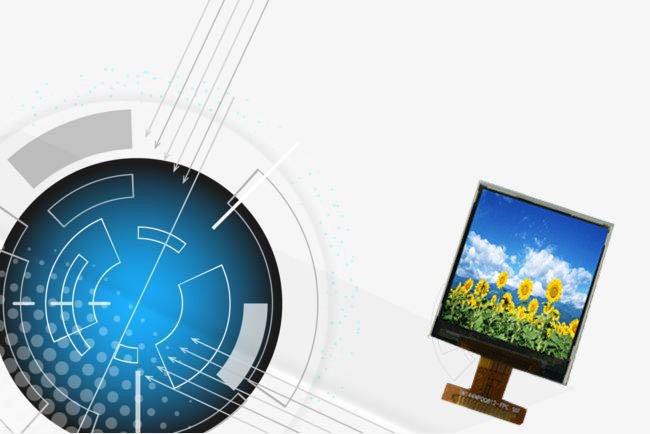
OLED or Organic light-emitting Diode is the Emitting Light Emitting Diode, Also known as aka Organic Electroluminesence Display (OELD). Because of their lightness and power saving, OLED screens have many advantages over LCD screens. OLED principle: OLED refers to the phenomenon that organic semiconductor materials and luminescent materials, it can driven by electric field, it also can be emit light …
In principle, the capacitor screen USES the human body, as an electrode of a capacitor element. When a conductor is coupled with enough capacitance value between the interlayer ITO working face and the conductor, the current will be enough to cause the power screen to Improper operation. The capacitive touch screen is coated with thin electrodes on all sides of …

The resistive touch screen is controlled by pressure sensing. Resistive touch screen is a main part of the surface, this is very match the resistance of the film and display screen, many multilayer structure composite films, it with a piece of glass or hard plastic flat as grassroots, surface coated with a layer of transparent . conductive metal oxide layer, …

The basic structure of OLED is a thin and transparent semiconductor indium tin oxide (ITO), which is connected to the positive pole of electric power, and another metal cathode, which is wrapped into a sandwich structure. The whole structure includes: hole transport layer (HTL), luminescence layer (EL) and electron transport layer (ETL). When the power supply to the appropriate voltage, …
For consumer of the electronics, How to transform the user’s complex control actions into an intuitive, convenient and productive experience, This is the ultimate challenge in user interface design. User interface design should be in consideration the user’s taste, smell, vision, hearing and touch , and so on. on the other hand , we must consideration is the impact of …