OLED 소개
26/04/2019
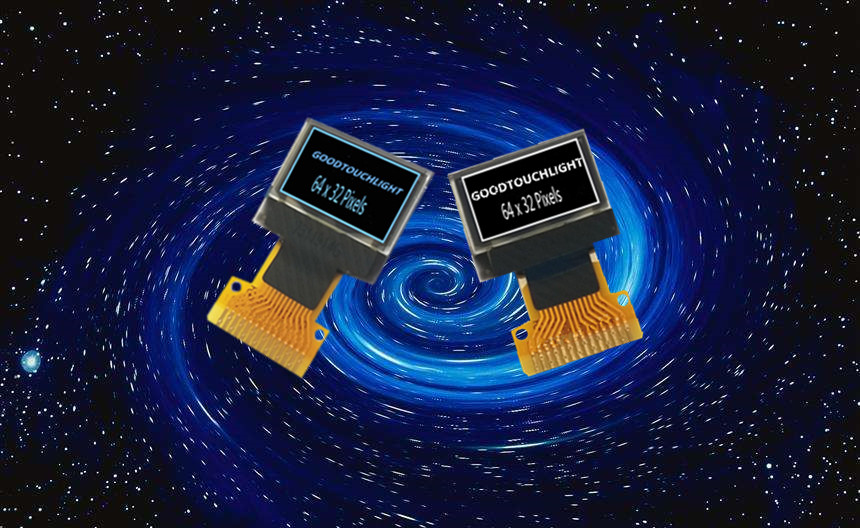
OLED의 기본 구조는 얇고 투명한 반도체 인듐 주석 산화물입니다 (이토), 전력의 양극에 연결됩니다, 그리고 또 다른 금속 음극, 샌드위치 구조로 싸여 있습니다. 전체 구조에는 다음이 포함됩니다.: 구멍 수송층 (증권 시세 표시기), 발광 층 (엘) 및 전자 수송층 (증권 시세 표시기). 적절한 전압으로 전원을 공급할 때, the positive electrode hole and the cathode charge will combine in the luminous layer, produce brightness, according to the formula of the red, green and blue RGB primary colors, constitute the basic color. OLED is characterized by its own luminescence, the different from TFTLCD which requires backlight, so its visibility and brightness are both high, followed by low voltage demand and high power saving efficiency, coupled with fast response, light weight, thin thickness, simple structure, low cost, etc., it is regarded as one of the most promising products in the 21st century.
The luminescence principle of organic luminescent diodes is similar to that of inorganic luminescent diodes. When the component is subjected to DirectCurrent; When the DC) derived forward bias voltage is added, the external voltage energy will drive the Electron (Electron) and Hole to be injected by the cathode and anode respectively. When the two meet and combine in conduction, the so-called electron-holecapture is formed. When a chemical molecule is excited by external energy, if ElectronSpin and ground state electron pair, it is a Singlet, and the light it emits is called Fluorescence. On the contrary, if the excited state electron and the ground state electron spin are unpaired and parallel, it is called Triplet, and the light released by it is called phosphorescence
When the state of the electronic location by the excited state of high-energy order returned to the steady low order, its energy will respectively by the photon (LightEmission) or thermal energy (HeatDissipation), 광자가 디스플레이로 사용될 수 있는 부분은 어디인가; PM-OLED 구성 요소의 이론적 광효율 한계는 단지 25%, 유기 형광 물질은 상온에서 삼중상 인광을 관찰할 수 없기 때문에.
PM-OLED 발광의 원리는 방출된 에너지를 물질의 에너지 준위 차이를 이용해 광자로 변환하는 것이다, 따라서 우리는 적절한 물질을 발광층으로 선택할 수 있다, 또는 발광층에 염료를 혼합하여 필요한 발광 색을 얻을 수 있다. 또한 전자와 정공 사이의 일반적인 반응 시간은 수십 나노초 내이다 (ns), 따라서 PM-OLED의 반응 속도는 매우 빠르다.
PM-OLED의 전형적인 구조. 유리 기판 위의 전형적인 PM-OLED, 이토 (인듐주석산화물; 인듐주석산화물) 애노드(양극) (애노드(양극)) 및 유기 발광층 (발광 물질층) 및 캐소드(음극) (Cathode), among them, the thin and transparent ITO Anode and Cathode metal like a sandwich to organic light emitting layer sandwiched between them, when the voltage injection holes (Hole) of Anode and Cathode to electronic (Electron) in organic light emitting layer, stimulate the organic material and light.
Currently, the multi-layer pm-oled structure with better luminous efficiency and widely used is required to produce HoleInjectLayer expect glass substrate, anode and cathode electrode and organic luminous layer. HIL) and HoleTransportLayer. 증권 시세 표시기, electronic transport layer; ETL and electronic injector layer; EIL) structure, and the transport layer between the electrode and to set up the insulation layer, so the thermal evaporation (Evaporate) processing difficulty relatively increased, the production process is complicated.
유기 재료와 금속은 산소와 수증기에 매우 민감하기 때문에, 생산 후 포장하고 보호해야 합니다. PM – OLED는 여러 층의 유기 박막으로 구성되어 있지만, 유기 박막의 두께는 약 1000 ~ 1500 Å (0.10 ~ 0.15 μm), 디스플레이 보드 (패널) 포장 시 건조제 (건조제) 총 두께가 200 μm (2 mm), 미만이고 가벼운 장점이 있습니다.
메모: FPDisplay 오리지널 또는 미디어 파트너의 정보
어쩌면 당신도 좋아할 것입니다
저작권 ©2004 Good Light Limited®
서비스
우리는 당신에게 완벽한 전시를 줄 것입니다